Showing posts with label nimby. Show all posts

Wednesday, April 27, 2011

The Black Eyed Peas, Don Hills, Electric Zoo, Prime 6 and DJ Neil Armstrong

Nightlife News for April 27, 2010
Compliled by Gamal Hennessy

Prince of the City
Nightlife and Urban Development
Prince of the City was recently cited in new study on nightlife and gentrification.

Business
NIMBYs (Not In My Back Yard)
Is Williamsburg Drying Out?
NIMBY elements of a community board in Brooklyn is attempting to follow a failed attempt in LES to stop new venues from opening.

Prime 6
The owner of a proposed hip hop venue in Brooklyn makes a deal with NIMBY elements to limit its music to acoustic shows only when performers play live. 

Don Hills
It was less than an year ago that the classic rock venue reopened. Now with the passing of Don Hill, the landlord has taken over the property and plans to tear the building down (Tie to D. Hill’s Death Post)


Culture
Electric Zoo
The music festival is set for Labor Day Weekend.

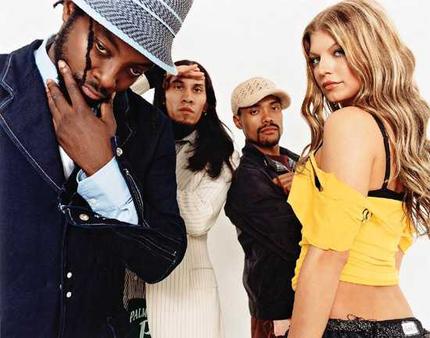
The Black Eyed Peas
The Hip Pop group has decided to start a music production school in New York, doing for video and music production what Run DMC did for DJing with Scratch Academy.

Hip Hop
A collection of Hip hop scholars fight against homophobia in the music and the culture.

DJ Neil Armstrong
A well established DJ who helped shape the mixtape scene and toured withJay-Z discusses the craft and personality that goes into the art of the DJ
Outdoor Venues
Urban Daddy offers some options for getting some sun while you get your drink… even if you are afraid of heights.

Venugo
A new website offer to make nightclubs bid for your party.

Have fun.
G

Monday, January 10, 2011

Andrew Andrew, Fraunces Tavern, NIMBYs and Tammany Hall

Nightlife News for January 11, 2011
Compiled by Gamal Hennessy

Culture
Andrew Andrew
The New York Times looks at the almost twin personalities of celebrity DJ’s Andrew Andrew.

Politics
Not in my Backyard
Eater reports that NIMBY's have prevented a wine bar from opening in Grammercy Park.

Venue News
Tammany Hall
Urban Daddy takes a look at what happens when a rock venue and a speakeasy have a lovechild.
Fraunces Tavern
One of the oldest venues in the country and the place where George Washington sat in the VIP section reopens this month. No tea parties please.


Have fun.
G

Monday, August 30, 2010

Nightlife Police, New NIMBYs and the Continuing Smoking Struggles


The Nightlife Report
Compiled by Gamal Hennessy

A New Influx of New York NIMBYs (The Wall Street Journal)
More residential skyscrapers are going up, which means more conflict between the nightlife industry and rich NIMBYs


The NYC Police Cabaret Unit (The Wall Street Journal)
The NYPD is reinstating its Cabaret Unit, which could be good news or bad news for New York nightlife.


The Potential of E-Cigarettes (The Wall Street Journal)
Are E-Cigarettes the anwser to the NYC Nightlife Smoking Ban? Probably not. City Hall will most likely ban them too.


Smoking Problems (Guest of a Guest)
Unlucky Strike: Juliet Supper Club In Cigarette-Related Trouble...Maybe they should try e-cigarettes...

New Venues
BlkMarket (Midtown)
Lamb’s Club (Midtown)
Tzigan (Meatpacking)
The Whiskey Brooklyn (Brooklyn)
XIX (Lower East Side)

Friday, July 9, 2010

Nightlife vs. Community Boards: July 2010


Compiled by Gamal Hennessy

A summary of the struggles between nightlife operators and NIMBY residents across the city.

Rooftop Bars
(Good Night Mr. Lewis)
Steven Lewis offers a detailed explanation of the bill that could curtail and suppress new and existing rooftop bars all over New York City.


Central Park
(New York Times)
Several different operators are submitting plans to revive the historic Tavern on the Green space, but they are going to have to spend up to $30 million to get the place opened again. If they fail, Mayor Bloomberg plans to make the space into a retail shop, which sounds strangely similar to the fate that the Limelight submitted to earlier this year.

East Village
(DNA Info)
A recent community board study shows that one in three storefronts in the East Village serves liquor, but with 2010 New York real estate prices who else can afford to open there besides Chase, Duane Reade and Starbucks?

Flatiron District
(DNA Info)
The owners of Buddha Bar might not be able to turn a 6,000 square foot space on Park Avenue South into an upscale lounge because when he says “I’m building a restaurant” the community board hears “I’m building a huge club.”

Lower East Side
(EV Grieve)
NIMBY’s are banding their resources to fight a liquor license transfer of Soulgasm’s Sin Sin lounge.

Upper West Side
(DNA Info)
Residents in a $5 million dollar a unit condo haven’t been able to stop a wine bar from developing on Central Park West, but the residents are planning to take the case to court to prevent the venue from opening.


Have fun.
G

Friday, June 11, 2010

The Blind Barber, The Imperial, Loreley, NIMBY and More World Cup


The Nightlife Report for June 11, 2010
Compiled by Gamal Hennessy

…we hunt down the nightlife news so you don’t have to…

Events
World Cup
(Martini Boys)
If you don’t have a favorite spot to drink beer and cheer for your favorite team at 8 in the morning, check out these World Cup Headquarters locations.

Opening
The Blind Barber
(Urban Daddy)
The East Village may not need another barbershop, but this one has a cocktail lounge attached, so we’ll let it slide this time…

Lorely Williamsburg
(Thrillist)
Williamsburg may not need another beer hall, but this one used to be a gas station, so we’ll let it slide this time…

Closed
Imperial
(Club Planet)
The hotspot makes an early exit out of Flatiron.

Nightlife Media
Gamal Hennessy

(U.S. Politics Today)
Earlier this week I spoke to a group of politicians and regulators about the importance of nightlife to a city’s economic future.

Not In My Backyard (NIMBY)
New York Burger
(Chelsea Now)
The residents of West Chelsea are trying to close this Burger shop before it even opens, fearing another Pop Burger, because we all know a place that serves burgers and wine is really just a crack house in disguise.

West Chelsea
(Good Night Mr. Lewis)
Eight of the main venues in this area have shut down. A neighborhood that was once abandoned has been replaced by condos and skyscrapers. I wonder how that area got so popular? The answer of course is the very nightclubs that are now being pushed out.


Underage Drinking
(New York Post)
Mainstream media makes money building up the image of nightlife as a detriment to the city. Last week, the Post had an intern try and get drinks at various establishments and found that more than 50% of them were willing to severe at 20 year old liquor. Even if you ignore the fact that only 5 of the 17 places were actually nightlife venues (the others were bodegas and delis) the message to operators is clear: We are looking for reasons to attack you. This will most certainly be used as NIMBY ammunition when these venues come up for liquor license renewal.

Miss Lily
(Daily News)
Anna Wintour, the Queen of Vogue Magazine, rallied the NIMBYs against a new Jamaican themed venue from the operators who brought you The Box. It seems odd that the icon of cosmopolitan living would come out against the very thing that gives the city its energy. Where are all the pro nightlife celebrities out there?

Have fun.
Gamal

Wednesday, April 21, 2010

Community Boards, NIMBY and the Quality of Life


By Gamal Hennessy

This article is based on sections of the recent book
Seize the Night: The Business and Culture of New York Nightlife.

In spite of the global popularity and reach of New York nightlife, local politics has a direct effect on the viability of clubs in the city to remain open. The main players that determine what happens in districts, neighborhoods and individual blocks are the local community boards or CBs. Natives who attend a liquor license hearings at regular CB meetings or the events like the nightlife discussion group at the recent
Community Convention would experience a lot of animosity from local residents directed at the industry. To understand where this anger comes from, it helps to know what the CBs are, what they want and think about how the industry and residents can work together instead of being enemies.

What is a Community Board?
Community Boards are meant to provide a voice for local residents as to how their neighborhoods operate. Created by the New York City Charter in 1963,
each of the CBs is supposed to consult, assist and advise government officials about any matter that relates to the welfare of the district or its residents. CBs normally deal with service delivery (such as sanitation or road repair), the city budget as it relates to each district, land use, long range planning and community advocacy. CBs also have a voice in zoning changes, since any application for a change in - or variance from - the zoning resolution must come before the Board for review and which is part of the final determination. Finally, CBs have the ability to initiate their own plans for the growth and well being of their communities based on the needs of their particular residents.

Who Sits on the CBs?
New York City has 59 individual CBs in total, 12 of them located in Manhattan. The CBs are technically autonomous from the city government, but the CB members are appointed by the Borough President, can include city employees and each board member is considered a city officer. Board members are selected from people who reside in, have a business in, or have some significant interest in the community. Nightlife operators, who clearly have an interest in the community where their business is located, can also serve on CBs.

While the CBs are designed to give local residents a voice in the operation of their communities, critics point out that many of their decisions and actions are made without due process or accurate representation of the community. It is primarily the people who attend the meetings who have the most influence in the decision making process, whether or not they represent the general views of their specific area. These “squeaky wheels” might be few in number, but if they are the only ones to speak on a particular issue, then they become the defining voice of the community. The phenomenon is analogous to voting in local and national elections. If only a small number of eligible voters participate, then their votes have more impact on the election than the silent majority has.

What is The Agenda of The CBs?
There are dozens of issues that each CB has to deal with - from sidewalks to community services, to traffic, to budgets. Each CB has its own particular needs based on the people who live in the respective communities. But when you look for the common thread among all the things that CBs deals with, what you find is that they are striving to improve their
quality of life as they define it. For some, a better quality of life comes from traffic free streets that are more accessible to pedestrians. For others, it’s continuously increasing property values for their condos and co-ops. In relation to nightlife, increased quality of life translates into the desire for clean, quiet streets that are safe to travel at night. The problem is that active members of many CBs do not feel that nightlife venues are conducive to their quality of life.

Many CBs feel that nightlife venues are magnets for noise, crime and vandalism in their communities. The main grievance of local residents is the noise from the areas around clubs and bars. People report finding urine, vomit, used condoms or even unconscious people in their doorways. There are anecdotal instances of local residents being harassed as they passed a club at night, having food or other objects thrown at them or being threatened by knives, bottles or hypodermic needles. They feel their neighborhoods have two personalities: during the day they are the envy of urban living, at night they become almost unlivable.

The CBs are not in the business of protecting and nurturing nightlife as a cultural environment. They are not tasked with generating revenue, tax dollars or tourism from a healthy hospitality industry. They are not guardians of New York’s reputation as a nightlife capital. While all CBs recognize the need for businesses in their communities and many of them understand the benefits of nightlife in the city, their main obligation is to their residents and the quality of life these residents want. The thought process is, “New York needs nightlife, but
not in my backyard (NIMBY).” If the residents want change, it makes sense for them to use the CBs to affect that change.

Common Goals
While the relationship between CBs and nightlife is often contentious, there are areas where they can find common ground. If noise and safety are the major concerns of CBs, then it would be in their best interest to support operators in the attempts to convince the NYPD to monitor the areas outside the venues that need it. CBs and operators in each district can work together to create more separation between residential and commercial areas. The density of New York prevents any major segregation of residential buildings, but including venues in the future planning of districts - instead of pursuing an agenda of removing them in favor of other types of business - is ultimately better for the CB and the nightlife industry. Speaking with a common voice in terms of new construction can also improve the quality of life, if both groups urge the use of soundproof windows and other measures to reduce noise in all new construction. Finally, if the CB and the operators work together to educate residents about the benefits of nightlife in their communities, there would be less of a NIMBY mentality associated with nightlife. There would always be “squeaky wheels” unsatisfied with the presence of clubs where they lived, but those voices could be tempered with more moderate positions.

Who Makes the Choices?
Of course, none of this cooperation can take place until each group sees the other as necessary to the overall prosperity of the neighborhood. Part of this means that more vocal anti-nightlife members of the CB need to see that nightlife is a vital part of both their community and New York as a whole. It also means that they might have to accept the economic reality that removing nightlife from their neighborhoods may reduce their quality of life and increase their taxes as vacant buildings attract higher crime or higher property taxes. Finally, it means that people who enjoy clubs need to stand up and say so. CBs have influence and political will to close venues. Until nightlife natives gain and use political will and influence to nurture and sustain our culture, New York nightlife will continue to suffer.

Have fun.G

Join us on
Facebook
Follow us on Twitter
Sign up for the Insider Newsletter